Perforated Dyeing Cones: How They Work and How to Choose the Right One in Pakistan

Package dyeing is one of the most common ways to colour yarn in Pakistan’s textile mills and dyeing units. At the heart of this process is a simple but critical component: the perforated dyeing cone. The right cone gives even, consistent colour across the whole yarn package. The wrong one causes shade variation, rejected lots and wasted dye.
This guide explains how perforated plastic dyeing cones work, the different types available, and what dyeing units in Lahore, Faisalabad and across Pakistan should check before buying them in bulk. It is written by Usman Packages Industry, a Lahore manufacturer that produces more than 1 million cones every month.
What Is a Perforated Dyeing Cone?
A perforated dyeing cone is a plastic carrier on which yarn is wound before dyeing. Its surface is covered with holes or slots. During package dyeing, the cones are stacked on spindles inside a dyeing machine, and dye liquor is pumped through the spindle, out through the perforations and into the yarn. The flow then reverses, pushing dye back through the package. This in-out flow is what gives uniform colour from the inner layers to the outer layers of yarn.
Because the dye has to pass through the cone itself, the design of the perforations, the strength of the plastic and the accuracy of the shape all affect the final shade.
How Package Dyeing Works, Step by Step
- Soft winding: raw yarn is wound onto perforated cones at a controlled density so that dye can pass through evenly.
- Loading: the wound cones are stacked on the spindles of the carrier and pressed to the correct height.
- Dyeing: the carrier goes into the dyeing machine, where hot dye liquor circulates through the cones under pressure.
- Washing and finishing: the yarn is rinsed, treated and dried on the same cones.
- Rewinding: the dyed yarn is rewound onto final cones for weaving or knitting.
Throughout this process the cone faces heat, pressure and chemicals, so it must keep its shape and strength.
Types of Perforated Dyeing Cones and Tubes
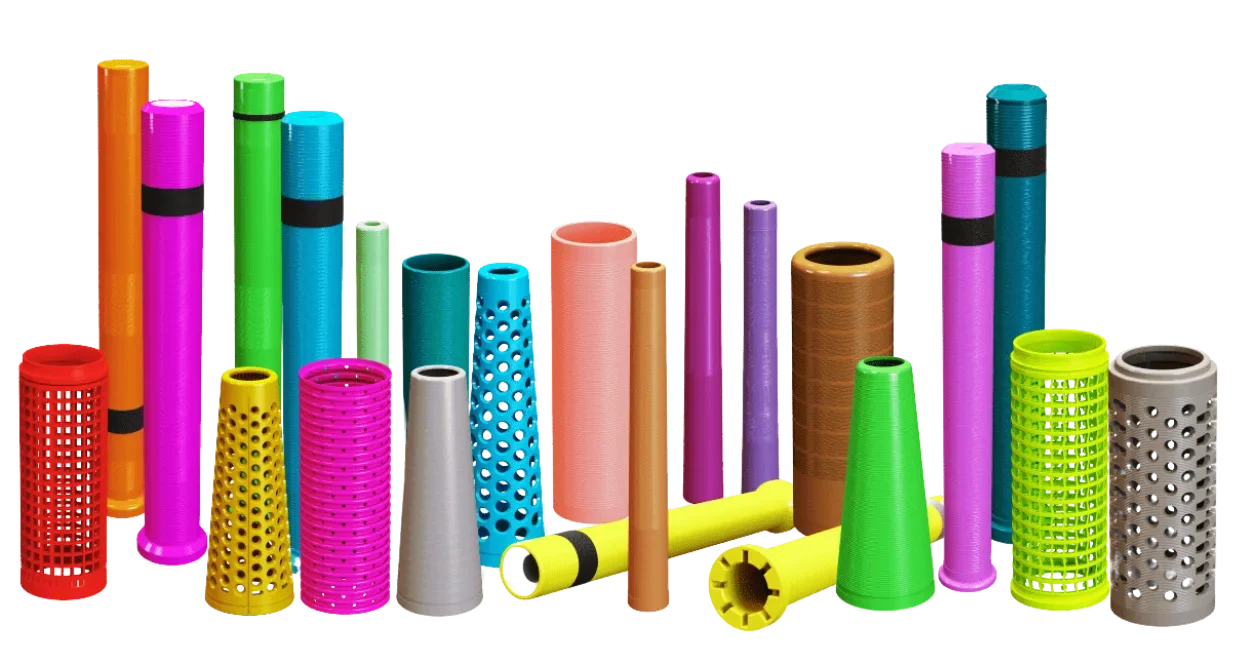
Conical Perforated Cones
Conical cones are tapered and are widely used for cotton and blended yarns. Their shape allows stable stacking on the spindle.
Cylindrical Dye Tubes
Cylindrical perforated tubes, also called dye tubes or cheese tubes, produce straight-sided packages. They are common in mills that dye large volumes of the same yarn count.
Perforated Dyeing Bobbins
Dyeing bobbins are similar to dye tubes and are used for specific machines and yarn types. You can see examples in our plastic yarn dyeing cones range.
Why the Perforation Pattern Matters
The size, shape and spacing of holes control how dye flows through the package:
- Open area: more open area allows freer flow but can reduce the strength of the cone.
- Even distribution: holes should be spread evenly so no part of the package receives more dye than another.
- Clean edges: smooth hole edges protect the yarn from damage during winding and dyeing.
A well designed cone balances flow and strength, giving level dyeing without collapsing under pressure.
Quality Checks Before Buying Dyeing Cones
- Heat resistance: the cone should keep its shape at the temperatures used in your dyeing process.
- Dimensional accuracy: all cones in a batch should have the same height, diameter and taper so they stack correctly.
- Strength: press the cone by hand. It should not crack or deform easily.
- Surface finish: check for rough edges that could damage yarn.
- Batch consistency: compare cones from different cartons. Consistent cones mean consistent shades.
Single-Use vs Reusable Cones
Some mills reuse dyeing cones for several cycles, while others ship the dyed yarn on the same cone to the customer. Reusable cones need higher strength and heat stability. If your yarn leaves the mill on the cone, cost per piece becomes more important. Tell your supplier how you use the cones so they can recommend the right option.
Buying Dyeing Cones in Pakistan: Practical Tips
- Share your machine type, spindle size and yarn type with the supplier.
- Ask for samples and run a small trial lot before a large order.
- Confirm monthly capacity, especially if you need regular deliveries.
- Buy from a manufacturer rather than a trader to get better prices and consistent quality.
If you also buy hangers for your garment unit, read our buyer’s guide to plastic hangers in Lahore.
Perforated Dyeing Cones from Usman Packages Industry
Usman Packages Industry manufactures perforated yarn dyeing cones, dye tubes and dyeing bobbins in Lahore. With production of more than 1 million cones every month, we supply textile mills and dyeing units in Lahore, Faisalabad and across Pakistan. We offer standard and customised sizes and colours at competitive rates, with on-time delivery.
Common Dyeing Problems Linked to Cones
Many shade problems that dyeing masters blame on dyes or machines actually start with the cone. The most common issues are:
- Light inner layers: if perforations are blocked or too few, dye cannot reach the yarn closest to the cone, leaving a lighter inner shade.
- Channelling: uneven hole spacing lets dye rush through some areas and bypass others, causing streaks.
- Collapsed packages: weak cones deform under pressure and heat, changing package density and shade.
- Poor stacking: cones with inconsistent height or taper leave gaps on the spindle, so dye liquor escapes instead of passing through the yarn.
- Yarn damage: rough hole edges cut or fray fine yarns during winding and dyeing.
When shade variation appears across lots, check the cones as well as the recipe. Switching to accurate, consistently made cones often solves the problem.
Matching the Cone to Your Yarn
Different yarns behave differently in package dyeing. Cotton yarns are usually dyed at lower temperatures than polyester, which is dyed under high temperature and pressure. Polyester dyeing therefore needs cones with better heat stability. Fine counts need smooth cone surfaces, while coarse counts need strong cones that can carry heavier packages. Share your yarn type, count and dyeing temperature with your supplier so they can recommend the right cone.
Storage and Handling Tips
Store cones in a clean, dry area away from direct sunlight. Keep them in their cartons until use so they stay free of dust and oil, which can affect dyeing. Avoid stacking cartons too high, as heavy loads can deform cones at the bottom. Rotate stock so older cartons are used first.
The Cost of Poor Cones for a Dyeing Unit
A single rejected dye lot can cost far more than a full year’s difference in cone prices. When a lot shows shade variation, the unit must either re-dye it, which uses more dye, chemicals, water, steam and machine time, or sell it at a lower grade. Both options hurt profit. In export orders, shade variation can also lead to claims and lost customers. Investing in accurate, consistent cones is one of the simplest ways to protect right-first-time dyeing results.
Track the number of re-dyes and shade complaints for each month. If these rise after a change of cone supplier, the cones should be the first thing you check.
Frequently Asked Questions
What is the difference between a dyeing cone and a yarn cone?
A dyeing cone is perforated so dye can pass through it. A plain yarn cone has a solid surface and is used for winding and storing yarn.
Can you make dyeing cones in custom sizes?
Yes. Share your machine and spindle details and our team will confirm the right size.
How many cones can you supply each month?
We produce more than 1 million cones every month, which allows us to handle large and repeat orders.
Key Takeaways
- Perforated cones let dye flow evenly through the yarn package.
- Even perforation and accurate dimensions prevent shade variation.
- Match cone heat resistance to your yarn and dyeing temperature.
- Run a trial lot before placing a bulk order.
Need a quotation from Usman Packages Industry?
Call 0333 4653659 or message us on WhatsApp 0333 4653659. You can also schedule a meeting at our office in Green Town, Lahore to see our hanger and cone collection.